New Standards Set in Dubai Escort Service: The Rise of High Class and VIP Escorts in Dubai

This week, the world of luxury companionship was redefined as the leading Dubai escorts community unveiled a series of enhancements across the dubai escort service landscape. As tourism and business locally reach record heights, the demand for professional, discrete, and high class escorts in dubai is surging, setting new benchmarks for quality, reliability, and exclusivity in the market.

Escorts in Dubai: Elevating the Experience with Unmatched Professionalism

In a city renowned for its luxury lifestyle and cosmopolitan atmosphere, escorts in dubai have become synonymous with sophistication and exceptional service. More international visitors, from business executives to leisure travelers, are seeking reputable dubai escort agency options that prioritize both privacy and top-tier companionship. Agencies are responding by recruiting only the most talented and multilingual dubai female escorts, ensuring that clientele enjoy memorable and meaningful experiences tailored to personal preferences.

Dubai Escort Agency: Setting the Gold Standard for Safety & Confidentiality

With the increased visibility of dubai escort agency services, customers are more discerning about whom they trust. In response, agencies have implemented rigorous screening processes and enhanced confidentiality protocols to build client confidence. This attention to discreet service further cements Dubai’s status as a premier destination for those seeking high class escorts dubai, combining beauty, intelligence, and discretion. Reliable information and further details about these agencies’ standards, as well as government compliance updates, can be found at https://www.khaleejtimes.com.

Dubai Female Escorts: A New Era of Empowered Companions

The emergence of dubai female escorts from diverse cultural and professional backgrounds is reshaping the scene. Today’s escorts bring more than just elegance; they offer conversations spanning art, business, and international trends, reflecting Dubai’s progressive and global spirit. Industry insiders note that VIP escorts dubai are increasingly requested for events ranging from corporate functions to private gatherings, a shift thanks to enhanced safety measures and comprehensive training provided by reputable agencies.

VIP Escorts Dubai: Redefining Luxury and Exclusivity in the City

The latest updates highlight how vip escorts dubai are leading a trend toward ultra-premium companionship. These select groups of companions are known for impeccable style, multilingual skills, and extensive world travel, making them perfect partners at the city’s most prestigious locations. Regular customers now benefit from advanced scheduling platforms and 24/7 support lines, reinforcing Dubai’s commitment to excellence in the dubai escort service sector.

Technological Innovations Transforming Dubai Escorts Industry

Technology is at the heart of the transformation. Top dubai escort agency firms have rolled out secure online booking systems integrating biometric verification and encrypted communications. This provides maximum privacy for clients while streamlining the search for the perfect companion among hundreds of dubai escorts. Insights into digital innovation within this sector are regularly covered by local business publications including https://gulfnews.com. These improvements underscore a shift to using AI-assisted profiling, ensuring compatibility and fulfilling unique client preferences more accurately than ever before.

High Class Escorts Dubai: Leading the Region’s Luxury Service Marketplace

Industry experts believe high class escorts dubai are setting new benchmarks for personalized service. The premier dubai escort service providers now focus not just on appearance or etiquette but also on companionship enriched by culture, intelligence, and emotional intelligence. This shift reflects a global trend and reinforces Dubai’s reputation as a regional leader in safe, sophisticated adult entertainment.

With local authorities closely monitoring compliance and maintaining strict regulations, the future of dubai escorts remains bright. Professionals anticipate further enhancements in training standards and client service, bridging international expectations with the unique allure of this dynamic city.


How I Track DeFi Moves on Ethereum Without Losing My Mind

Whoa!

There are days when the mempool looks like Times Square. Smart contracts fire off tiny transfers, approvals, and swaps in rapid succession. At first you feel overwhelmed watching gas spikes and nonce juggling, but over time you learn patterns, heuristics, and the tools that actually let you follow dollar flows without going crazy. Initially I thought the only way to keep up was to run a full node and write a custom parser, but then I realized that explorers and APIs—when combined with careful filtering and ABI decoding—cover most common needs.

Hmm…

For Ethereum developers and DeFi users, being able to track contracts and token movements is a survival skill. You want to spot rug pulls, spot a stuck approval, or watch liquidity migrate out of a pool. On one hand the chain is transparent—every transfer logged—but on the other hand that raw data is noisy, incomplete, and full of context you only get by tracing internal transactions and events across multiple token standards. So you need workflows: filters for events, label databases for known addresses, and periodic audits of token approvals to catch creeping permission grants.

Seriously?

Start with the explorer UI you trust—bookmark pages for the contracts and addresses you care about. Tools like transaction trackers, token approval checkers, and analytics dashboards save hours. If you want to be programmatic, use the explorer’s API to pull transfer events, decode logs using the contract’s verified ABI, and correlate the timestamps with on-chain price oracles to quantify the dollars at risk. I prefer simple scripts that run hourly and alert on unusual approval sizes or new delegate calls.

Here’s the thing.

APIs are great, but rate limits and API key quotas bite when things go sideways. Caching event signatures and decoding only what’s changed reduces calls dramatically. My instinct said “pull everything in realtime” when I first built a monitor, though actually I learned that a prioritized pipeline—where you watch high-value addresses and token contracts more closely while sampling lower-value flows—keeps costs down and still catches most cases. And yes, webhooks are amazing once you have reliable filtering, but they require very very careful housekeeping.

Wow!

Decoding internal transactions matters because swaps and router calls often manifest as a single parent transaction with multiple internal traces. You need to follow logs: Transfer events, Approval events, and custom events emitted by DeFi protocols. When a token is unverified, you can still infer behavior by reading constructor parameters, bytecode patterns, and comparing events to known ABIs, though that takes time and sometimes somethin’ like manual reverse-engineering. This is where explorer features that surface internal txs and decoded input data pay off.

Really?

Approvals are a headache—users approve contracts to move tokens and then forget them. Track allowances across wallets to spot excessive permissions, especially the ones that are “infinite”. Initially I thought revoking approvals would be sufficient, but I found that some projects reissue permissions during upgrades or through multisig flows, so continuous monitoring plus human review is needed. Automated reports that show the top token allowances per address can highlight systemic risks quickly.

Hmm…

Privacy and attribution are messy: ENS names help, but many actors use fresh addresses or contract factories to obfuscate flows. Label databases in explorers are community-maintained and sometimes lag, so cross-referencing on-chain heuristics is useful. On one hand heuristics like common-nonce reuse or signature replay can link addresses, though actually they can generate false positives, so treat inferred attributions as leads not gospel. And yes, MEV bots will complicate timelines by sandwiching, reordering, or rebasing transactions—so look at the mempool and block building if you care about exact execution context.

Whoa!

If you dig into tokenomics, watch the transfer patterns to distinguish redistribution from wash trading. Some tokens emit frequent tiny transfers to multiple addresses as part of reflections or anti-whale mechanics. A practical workflow: monitor the Transfer events, build a small holder distribution snapshot every day, and flag abnormal concentration changes beyond a threshold that you define per project, which helps catch siphons early. This works well combined with liquidity pool tracing: when LP tokens are removed, assets can be moved to new contracts rapidly.

I’ll be honest…

Sometimes I rely on the explorer’s transaction internal view to reconstruct a user’s journey, step by step. That view shows contract calls, nested transfers, and event logs, letting you build a narrative for audits or incident response. Actually, wait—let me rephrase that: what I do is combine that narrative with off-chain telemetry, like exchange deposit addresses and known bridge flows, to triangulate where funds moved across chains or were cash-out points. It’s not perfect, but it’s pragmatic.

Screenshot-style schematic showing an Ethereum transaction with internal traces, logs, and decoded inputs.

Where to start when you need a UI or API

Check tools like the etherscan blockchain explorer when you need a reliable UI or API to start—it’s not the whole solution, but it’s the foundation most teams lean on. Use verified ABI decoding, enable event filtering, and export the CSVs for quick pivot-table checks. Build a shortlist of watch addresses, keep an approvals registry, and set conservative thresholds so you’re not chasing every oddity. Over time you’ll get faster at distinguishing real incidents from noise, and you’ll sleep better—well, usually…

Common questions

How do I detect a rug pull early?

Look for sudden LP removal, a pattern of approvals being transferred to new contracts, and holder concentration spikes; correlate those with outflows to exchanges or bridges. Alerts on large single-block transfers out of the LP contract are the clearest early signal.

Can I trust automated labels?

They’re useful but imperfect. Treat labels as cues and verify by reading the transaction traces and contract source when possible. I’m biased, but human review on high-value alerts is very very important.

Why a Desktop Wallet with an Integrated Exchange Can Be Brilliant — and Risky

Whoa, this feels familiar. I downloaded a desktop wallet last week to test built-in exchange. My gut said the UX might be slick but risky. There were little things that nagged at me the whole time. Initially I thought a single app handling many assets was just convenient, but then I realized it concentrates failure points and adds subtle privacy trade-offs I hadn’t expected.

Seriously? Take a breath. I tried swapping ETH for USDC inside the wallet to see slippage. Fees showed clearly, but route choices weren’t always obvious to me. Hmm… my first impression was ‘nice’, though the routing hid some liquidity sources. On one hand the convenience of an integrated exchange removes friction for casual traders, but on the other hand it arguably increases counterparty exposure and centralizes risk in ways that require careful thought.

Here’s what bugs me. The built-in exchange often feels too opaque for advanced traders. Order routing can favor one liquidity source over another without explanation. I appreciated instant swaps for moving between assets quickly during market moves. But when volatility spikes those ‘instant’ swaps can lag market depth information, producing worse effective prices than you’d get on a dedicated orderbook, which matters if you’re moving meaningful balances.

Whoa, surprises popped up. Security model matters more than UI polish when your keys are on desktop. A desktop wallet stores private keys locally, and that has pros and cons. I’m biased toward self-custody, but I also admit convenience is persuasive for many people. Actually, wait—let me rephrase that: self-custody reduces third-party risk, though it increases responsibility, and for some users that extra operational overhead is the real dealbreaker, even if they don’t say it out loud.

Hmm… somethin’ felt off. Recovery flows vary between wallets and can be confusing during initial setup. I watched a friend almost miswrite a seed phrase because the steps were terse. Little UI oddities can cause very very big losses if someone skips backup steps. So when a multi-asset wallet adds swaps and exchange functionality, the onboarding must be exceptionally clear, with fail-safes and educational nudges, because user error in that environment is a top source of irreversible loss.

Okay, so check this out—. The wallet I tested had built-in support for dozens of tokens and chains. That breadth is alluring, especially if you like to experiment across ecosystems. But breadth multiplies attack surface, and dependencies on external nodes or APIs increase systemic risk. My instinct said more features mean more points of failure, and after poking at logs and network requests I confirmed there were external calls that could be further hardened or removed to improve privacy and resilience.

Whoa, this screenshot surprised me. The swap path showed multiple rails stitched together behind a simple button. That is convenient, though you should know what each hop implies for fees. Fees can be layered, and a single swap might touch many pools and bridges. Seeing this visualization made me pause because the UX masked intermediate steps that I would have wanted to review for safety, especially when moving tens of thousands of dollars or more in a single transaction.

Screenshot showing swap path and fees inside the wallet, with routes and pools highlighted

Where to get it and what to watch for

I’m biased, but transparency matters. If you want to try a desktop multi-asset wallet with an integrated exchange, test with small amounts first. For convenience I use the official release channel to reduce supply-chain risks during installation. Okay—if you decide to download, double-check checksums and keep your seed phrase offline and secure. You can find a link for the official installer and release notes here: exodus wallet download, but remember to validate signatures and prefer direct vendor pages or verified mirrors when possible.

Here’s the thing. Built-in exchanges reduce friction for portfolio rebalancing and quick trades. They save time compared to moving funds off-wallet to a centralized exchange. Still, you trade some transparency for that convenience, and the pricing can lag true market depth. For active traders who require tight spreads and advanced order types, dedicated exchanges remain superior, whereas casual users who value simplicity may accept slightly wider spreads for the ease and privacy that a desktop wallet provides.

I’ll be honest—this part bugs me. Customer support and dispute resolution around swap failures are often murky. If a swap fails mid-route it’s not always clear who reimburses gas or slippage. Oh, and by the way, transaction nonces and chain-specific quirks can complicate recovery. Therefore, document processes, keep small test transactions, and consider hardware wallet integration for large holdings because a local app plus a hardware signer dramatically reduces the risk of remote compromise while preserving convenience.

Seriously, consider this too. Hardware wallets paired with desktop interfaces give a nice blend of control and convenience. I tested a Trezor and a Ledger with the same app and noticed subtle UX differences. Some flows required more clicks, others defaulted to faster but less transparent swaps. That variation matters because different hardware and software pairings change risk profiles and recovery narratives, so make sure your backup strategy fits the exact combination you plan to use in production.

Hmm… this left me thoughtful. There are compelling reasons to use an integrated desktop wallet for everyday moves. Convenience, single interface, and multi-asset support are real benefits for many Americans. On the other hand, centralization of routing and external APIs add risks some won’t accept. In the end, my recommendation is pragmatic: start small, vet the installer (for example the one linked above), use hardware backing for meaningful sums, and treat any app-based exchange as a tool you respect rather than a magic convenience that removes responsibility, because crypto doesn’t forgive mistakes…

Whoa, quick FAQ

Is it safe to use an integrated exchange in a desktop wallet?

Is it safe to use an integrated exchange in a desktop wallet?

Yes, if you validate the installer, use test amounts, and enable hardware signing.

How should I verify the installer before trusting it?

Check published checksums and signatures against vendor announcements, prefer official vendor pages, and cross-reference community channels to confirm authenticity before installing anything that will hold your keys.

Reading DeFi Charts Like a Trader: Liquidity, Charts, and the Tools That Actually Help

Whoa, that wick was wild. I was staring at the liquidity map trying to make sense. Trades were spiking while depth seemed shallow across pools. Initially I thought this was just noise from bots, but over several blocks the pattern repeated and my gut said somethin’ else. It felt like hidden liquidity was being teased out slowly.

Really, prices barely moved, very very. Yet on-chain traces showed aggressive maker-side reads pinging several new token pools. That’s when I opened a real-time DEX chart and started tracing liquidity shifts. Actually, wait—let me rephrase that: initially I thought this was some arbitrage noise, but linking orderbook snapshots to pool balances proved otherwise and forced me to rethink entries. My instinct said headline volume felt deceptive and unstable.

Hmm… this one stuck with me. Liquidity analysis isn’t glamorous, but it’s where true edge lives for many DEX traders. I dug into price impact curves, tick spacing, and slippage profiles across AMM versions. On one hand concentrated liquidity on v3-style pools can dramatically reduce slippage for passive LPs, though actually those same concentrations can create cliff edges where a single large pull can wipe out apparent depth and cause cascading price moves. This part bugs me because UI charts often smooth over those cliffs.

Okay, so check this out— I started combining multi-timeframe liquidity views with trade heatmaps to filter false signals. Chart overlays that show reserved depth, pending limit liquidity, and active taker flow helped a lot. Initially I favored a single dashboard, but then realized that combining granular pool diagnostics with broader market heatmaps is far more robust for timing entries and exits under stress. I’m biased toward tools that let me slice data quickly.

Wow, watch that liquidity shift. Check this image—it’s messy, but tells a story about token flow. I captured pool snapshots before and after a large swap, and depth vanished in minutes. When you layer trade origin IP clustering (where available), router patterns, and on-chain event timing, you start to separate genuine demand from bot-led wash activity, which is crucial if you’re trying to avoid false breakouts that eat your stop losses. Somethin’ about that is comforting once you see it.

Screenshot of pre- and post-swap liquidity depth showing a rapid drop in pool reserves

Why the right charts matter

Here’s the thing. I lean on dexscreener for quick token scans and live liquidity reads. It surfaces pools, charts, and trade flow without making you click ten menus. Initially I thought it was just another aggregator, but after customizing alerts for sudden depth changes and overlaying time-weighted liquidity metrics, it became a go-to for pre-trade checks when speed matters most. Not perfect, but definitely a multiplier for situational awareness.

Seriously, don’t ignore orderflow. If you care about execution costs, read beyond candlesticks into depth. Markers like depth delta and maker-taker imbalance reveal stress earlier. On one hand it’s tempting to overfit strategies to backtests that ignore execution friction, though on the other hand the right real-time overlays prevent you from stepping into traps during thin liquidity windows, which is invaluable when trading mid-cap tokens. I’m not 100% sure about every metric, but these have helped me cut bad fills.

Quick FAQ

How do I use charts to avoid liquidity traps?

I’ll be honest. How do I use charts to avoid liquidity traps? Watch depth and slippage bands across multiple pools before sizing. Pay attention to taker flow spikes and router changes over short windows. On paper it sounds simple, though in practice you need a workflow that alerts you to sudden depth erosion, correlates that with executed trade sizes, and then helps you decide whether to scale in, hedge, or step back until liquidity recovers.

Why NFTs, Phantom, and Staking on Solana Feel Like the Next Big UX Fight

Wow! So I was thinking about NFTs on Solana recently. They feel fast and cheap compared with a lot of alternatives. My first impression was pure excitement, though somethin’ felt off about the UX and wallet flows. Yet the community energy keeps drawing me back to the chain.

Whoa! NFT drops still move quickly and often reward early believers. But there are tradeoffs, and sometimes the tools for beginners are rough. Initially I thought gas and fees were the whole story, but then realized that wallet design and discoverability matter even more for mainstream adoption. On one hand low transaction costs let creators experiment with editions and interactive mints, though actually the secondary markets and metadata standards still need care and clearer conventions that developers and wallets have to coordinate on.

Seriously? Phantom has been central to that discussion in recent years. Users want a seamless web experience without juggling seed phrases every time. And yes I use wallets all the time, I’m biased but practicality matters to me. If a web version removes friction and still preserves custody for the user, that could be a real tipping point for onboarding, though there are thorny security questions to answer around browser contexts and extension models.

Hmm… Okay, so check this out—there is a web-focused phantom web experience that people ask about. The curious thing is how that interacts with NFTs and staking in a single flow. Wallets must show assets, let you sign safely, and explain staking without overwhelming new users. Building those UX patterns means thinking about device recovery, cross-origin security, and how to present delegation rewards in a way that feels both trustworthy and simple even for people who are just learning about nodes and validators.

Screenshot of a Phantom web wallet showcasing NFTs and staking options

Here’s the thing. Staking SOL deserves a better narrative and clearer incentives for newcomers. Right now rewards, lockups, and validator choices confuse people. When Phantom (or a web counterpart) can let users stake directly from their browser without copying commands, and while still preserving private key control through secure enclaves or account abstraction, the experience changes dramatically and retention improves. There are complications though, like how validators report performance, how slashing risks are communicated, and whether liquid staking derivatives are presented as optional or default, all of which require careful product and community governance decisions.

Whoa! NFT marketplaces on Solana have matured, but UX inconsistencies persist. Minting interfaces vary and metadata displays can be misleading. A web wallet that surfaces traits and provenance helps collectors decide faster. From a developer standpoint, integrating wallet adapters for the web, handling RPC load, and standardizing metadata are all tasks that need coordination between projects, marketplaces, and infrastructure providers before a truly smooth experience appears.

Really? I like the direction, but this part bugs me. Sometimes wallets add features in isolation, creating fragmented experiences where one app shows royalties and another hides them, and that inconsistency undermines trust, especially when buyers don’t know why prices vary between platforms. On the other hand, sync between marketplaces, better metadata curation, and clearer UI for royalties could restore confidence, although the work requires both engineering and thoughtful economic modeling to avoid unintended incentives. Honestly, governance and standards play a big role here across ecosystems.

I’m biased, but… If web wallets learn to show clear staking ROI and validator reputations, adoption could accelerate. I tried a few prototypes and some flows felt intuitive. Actually, wait—let me rephrase that: prototypes show promise but edge cases around account recovery, multi-device syncing, and phishing protections need real engineering work and thoughtful UX to avoid giving users a false sense of safety. So where does that leave creators and collectors who want simpler tools and clearer fees?

Practical takeaways and a few honest confessions

Creators should think about edition strategies that aren’t gas-taxing and should embed clear provenance in metadata. Collectors ought to prefer wallets that expose provenance and validator info in the UI, and always double-check signing prompts. I’m not 100% sure, but bridging novice-friendly web flows with secure custody is solvable if teams prioritize standards and shared libraries. Oh, and by the way, somethin’ about onboarding that nudges users into staking right after a mint could be powerful (but also risky if miscommunicated).

FAQ

Can I buy NFTs on Solana with a web wallet safely?

Yes, you can, but safety depends on the wallet’s signing UX, the provenance shown for the asset, and whether you confirm transactions on a trusted device; always verify domain names and never paste seeds into sites.

Is staking SOL through a web wallet secure?

It can be, if the wallet preserves key custody, provides clear validator metrics, and educates users about rewards and risks; still, recovery options and phishing protections are the hard parts that need real attention.

How I Started Staking SOL Through a Web Phantom Wallet (and What Surprised Me)

Whoa!

I’m thinking about web wallets on Solana today, honestly.

So many folks ask for a pure web experience over extensions or mobile apps.

Initially I thought browser wallets were mostly for quick trades, but then I saw how staking flows and account recovery actually change when you remove native clients and lean on web-based UI and remote key handlers.

This is about staking SOL through a Phantom-like web interface, and why it matters to regular users.

Really?

Yes, staking with a web wallet can be smoother than you expect.

My instinct said it would be riskier, but that was only half true, so I dug deeper.

On one hand a web app reduces friction and on the other hand it forces trade-offs in threat modeling that many tutorials skip over.

I’ll be honest—some parts bug me, and some parts surprised me in a good way.

Hmm…

To start, you need a wallet that handles keys securely in the browser.

Not all implementations are equal, and UX decisions hide security implications under the hood.

At first glance a web Phantom feels like a lightweight extension, though actually the architecture differs when key material is exposed in window contexts or delegated to secure iframes or hardware signers.

That difference determines how you stake, how you revoke permissions, and how you recover accounts after a lost device.

Whoa!

Staking SOL itself is conceptually simple—delegate your SOL to a validator and earn rewards.

But the devil lives in delegation transactions, rent exemptions, and unstake epochs.

When you do this from a web wallet the UX must nudge users to manage bloom phases, vote-credits, and commission rates, or otherwise people pick high-commission validators and wonder why rewards feel low.

There are sensible defaults, but if you want better yields you need to vet validators beyond the UI’s basic list.

Seriously?

Yes, and here’s a practical point—slashing risk on Solana is low, but you should still understand validator health metrics.

My working approach is: check uptime, check leader credits, and prefer decentralization over tiny commission wins.

Initially I thought focusing on commission was enough, but then I realized a balanced node selection reduces long-term downtime exposure and helps the network.

So pick validators like you pick local coffee spots—not just cheap, but reliable and aligned with community values (oh, and by the way, I like Brooklyn roasters).

Whoa!

Security patterns change on the web; content scripts and cross-site frames matter.

Something felt off about copy-paste recovery flows when I tested them across browsers.

Actually, wait—let me rephrase that: it’s not that web wallets are inherently unsafe, it’s that the attack surface shifts from OS-level malware to browser scripting and malicious third-party scripts, and you have to plan for that differently.

So keep your seed phrase offline, use hardware wallets if possible, and treat web wallets as one layer in a layered defense.

Hmm…

Now about Phantom specifically—there are web implementations aiming to preserve the feel of the native extension while running entirely in web contexts.

Some projects offer a hosted web version that mirrors extension features and integrates staking screens for SOL with a few clicks.

My instinct said feature parity would be easy, but real parity requires careful crypto plumbing: signature flows, transaction serialization, and nonce handling must behave identical across environments to avoid subtle bugs.

That means thorough testing across wallets and validators when you stake from a web interface.

Screenshot concept: Phantom web staking flow with validator list and reward chart

Trying a Web Phantom Wallet for Staking

Here’s the bit where I tried a web-hosted interface and wrote down how it felt.

First impression: the onboarding was fast and the UI empathized with new users, but some advanced settings were hidden behind menus.

My approach was pragmatic—set up a watching account, transfer a small amount of SOL, delegate to a trusted validator, and monitor rewards over a couple of epochs.

For folks looking for this kind of web experience, check out a web-hosted build like the phantom wallet which mirrors many familiar flows without forcing an extension install.

I’m biased, but the seamlessness felt good while I kept a hardware key on standby for signing important ops.

Whoa!

There are a few UX pitfalls to watch for with web staking flows.

One is hidden fees—some interfaces abstract transaction costs so users think staking is free, which it isn’t: there are lamport-level rents and occasional fee spikes during congestion.

Another is unclear unstake timelines; SOL uses epochs and unstaking isn’t instant, and missing that detail causes anxiety for new users.

So educate your users, or better yet, design the interface to make the waiting obvious and predictable.

Really?

Yes—monitoring and alerts matter, and the web provides creative hooks like browser notifications and dashboard widgets to make staking feel alive.

But those hooks create permission surfaces; ask for the minimal permissions and avoid persistent background privileges unless strictly necessary.

My instinct told me to prioritize transparency and reversibility: allow users to revoke delegations, clear sign requests, and view prior transactions without confusion.

Somethin’ about a clear activity log gives users confidence—very very important.

Hmm…

To wrap this ongoing thought: web-based Phantom experiences can make staking accessible to more people while keeping power in users’ hands.

On one hand they collapse friction and invite mainstream users; on the other hand they require deliberate security and educational design choices so people don’t misuse them.

I’ll be honest, I’m not 100% sure every web implementation is ready for mass adoption, though many are getting close with hardware integrations and better UX flows.

Keep experimenting, keep thinking about trade-offs, and if you try a web wallet start small and scale up as confidence grows…

FAQ

Can I stake SOL safely from a web wallet?

Yes you can stake safely if you follow best practices: keep seed phrases offline, prefer hardware signing for large amounts, and choose reliable validators based on uptime and commission.

What are the main risks of a web-based Phantom experience?

The main risks are browser-based attacks, script injection, and unclear permission models, so minimize permissions, use reputable builds, and double-check transactions before signing.

Why Your Charts Should Do More Than Pretty Lines: Real Talk on Advanced Charting for Traders

Okay, so check this out—I’ve been messing with charting platforms for years, and honestly the gap between what they promise and what they actually deliver still surprises me. Wow! The first time I loaded a multi-timeframe layout on a laptop and then mirrored it to a tablet, something clicked; charts stopped being static pictures and started behaving like living dashboards. My instinct said: if the tools feel alive, your analysis gets sharper. Initially I thought flashy indicators were everything, but then I realized clarity and workflow trump bells and whistles every time.

Seriously? A lot of traders chase indicator overload. Hmm… They layer ten oscillators and then complain the screen looks like modern art. Here’s what bugs me about that approach: complexity often disguises poor process. On one hand more data can reveal nuance, though actually too many signals just dilute true edge and slow decision-making.

Let me be blunt—charting platforms are utility tools, not trophies. Really? You need speed and predictability from them. My early setups were slow, clunky, and crashed mid-session; it taught me to value reliability over flash. Something felt off about relying on a platform that couldn’t keep up during volatile sessions, and I swapped ideologies—less spectacle, more stability.

Screenshot of layered crypto charts with indicators and price action notes

How to think about charting tools like a trader, not a tourist

Whoa! Start with the workflow, not the indicator list. A clean layout that supports quick pattern recognition matters more than customizing 30 colors and 50 moving averages. My rule of thumb: if it adds friction to decision execution, it’s junk. I’m biased, but I prefer a few well-tuned studies and fast template switching; somethin’ about muscle memory makes trades less chaotic.

Okay, quick practical bit—use a platform that supports multi-timeframe analysis and synced drawing tools. That means you mark a key level on a 4-hour and it appears on the 15-minute without manual tweaking. Really? It sounds small, but it saves minutes and prevents mistakes under pressure. If your platform lacks precise hotkeys or sync features, you’re fighting the software during live trades.

Here’s the thing. When volatility ramps up, execution windows vanish fast. Wow! You want charting that gives clean visuals, one-click order entries, and reliable alerts that don’t spam you. My instinct said alerts were overrated, yet properly tuned ones are life-savers during overnight moves. Initially I thought more alerts were better, but then realized that well-filtered alerts preserve attention and reduce costly distractions.

Practical features that actually matter (and why)

Shortcuts and hotkeys. Quickly toggling crosshairs or drawing a Fibonacci retracement can shave seconds off setup time. Really? Seconds become money in active sessions. If your tool lets you remap keys and save templates, you reduce cognitive load and avoid repeated setup errors.

Custom scripting and backtesting. Hmm… Many platforms boast scripting engines, but not all offer robust backtests with realistic assumptions. Here’s where nuance matters: the ability to simulate slippage, variable commissions, and order types separates toy tests from plausible scenarios. I’m not 100% sure every trader needs deep scripting, though if you want to develop a repeatable edge, it’s invaluable.

Data fidelity and feed selection. Wow! Crypto charts need different handling than equities due to exchange fragmentation. On one hand unified feeds simplify things, but on the other hand you lose exchange-specific quirks that sometimes create edge. Actually, wait—let me rephrase that: choose a platform that gives you granular exchange data when you need it, and aggregated views when you don’t.

Why chart customization is deceptively important

Here’s the thing. Colors and fonts are not vanity; they’re cognitive aids. Seriously? Picking a color scheme that reduces eye strain matters during long sessions. My eyes felt less fatigued after switching to a high-contrast layout, which made trendlines and volume profiles pop. Small design choices keep you focused, and focus preserves discipline, which is very very important.

Annotations and layout persistence. Wow! Being able to attach notes to specific bars and have those notes sync across devices is underrated. For example, tagging price action with “failed breakout” or “volume divergence” helps you revisit decisions later without guessing what you were thinking. I’m biased toward platforms that save workspaces automatically—losing annotations mid-analysis still irks me.

Order integration. Hmm… I used to analyze on one platform and execute on another, and it was painful. One-click entries, OCO orders, and partial-fill support streamline the workflow. Initially I thought analysis and execution could be separate, but then live slippage taught me otherwise—simplicity reduces friction and errors.

Where crypto charts need special attention

Crypto markets run 24/7 and manifest unique liquidity behavior. Really? That means traditional indicators tuned to stock hours can lag or mislead. My experience trading altcoins taught me to adjust ATR and volatility filters dynamically. On one hand patterns can repeat, though actually their repeatability varies across market cycles and tokens.

Watch for exchange-level idiosyncrasies and wash trading distortions. Wow! A single exchange’s orderbook can give a false sense of supply and demand if you don’t cross-check aggregated data. Something felt off the first time a token showed a sudden imbalance; digging into the orderbook uncovered spoofing that skewed the chart. Back then I lost small money and learned to verify.

One tool I keep recommending

I won’t pretend there’s a one-size-fits-all, but for traders who want a fast, extensible charting environment that accommodates both crypto and traditional markets, check this out—I’ve regularly suggested a platform that balances speed, community scripts, and clean UX. Here I’m embedding a link to a helpful source for getting the desktop client via an easy tradingview download when you want a quick install. Wow! The first run setup is simple and the community indicators are a solid starting point.

Be mindful: community scripts are a starting point, not gospel. Hmm… I often fork a script and simplify it rather than adopting it wholesale. Initially I thought more complexity equaled better performance, but then I learned that clarity and explainability help when things go sideways.

FAQ

Do pro-level indicators beat price action?

Short answer: no magic. Price action remains the backbone of technical analysis, and indicators should complement, not replace, price structure. I’m biased, but I prefer setups where indicators confirm observed price behavior rather than dictate it. On the other hand, indicators are useful for filtering and timing—balance both.

Is multi-device sync necessary?

Yes if you trade across devices. Seriously? Sync saves time and reduces mistakes. If you often switch between desktop and mobile, ensure your platform preserves chart states, drawings, and alerts reliably. Losing a drawn trendline mid-session has bitten me more than once, so I trust platforms that autosave.

Okay, parting thought—build your charts around decisions, not aesthetics. Wow! Make them fast, predictable, and explanatory. I’m not 100% sure any single setup will suit everyone, though if you prioritize workflow, reliability, and clear price context, your analysis will be sharper and your behavior more disciplined. Something to experiment with: simplify, then add what actually improves outcomes, not what just looks cool…

How I Use Solscan to Track Tokens and NFTs (and Why It Actually Helps)

Whoa!

I remember the first time I trawled through Solana tx history and felt confused. The blockchain moves fast and you need tools that keep up. Solscan is one of those tools. But there’s a lot going on under the hood—token flows, mints, burns, NFT metadata updates, and on-chain interactions that tell stories if you know where to look.

Seriously?

If you’re watching a new SPL mint, a token tracker saves hours. The same goes for NFTs, where ownership, metadata and verified collections can be messy and misleading. On Solscan you can inspect token accounts, search by mint address, and see holder distributions. That visibility matters because fake mints and lazy metadata are everywhere, and somethin’ about raw on-chain clarity just helps you sleep at night.

Here’s the thing.

I use the token tracker daily to trace airdrops and confirm legitimacy. Initially I thought the dashboard was just a prettier block explorer, but then I dug into holder charts and realized you can spot concentration risks fast. Actually, wait—let me rephrase that: the visuals guide you, but the numbers tell the real story. So, quick wins: look at top holders, check token supply changes, and scan for odd transfer patterns.

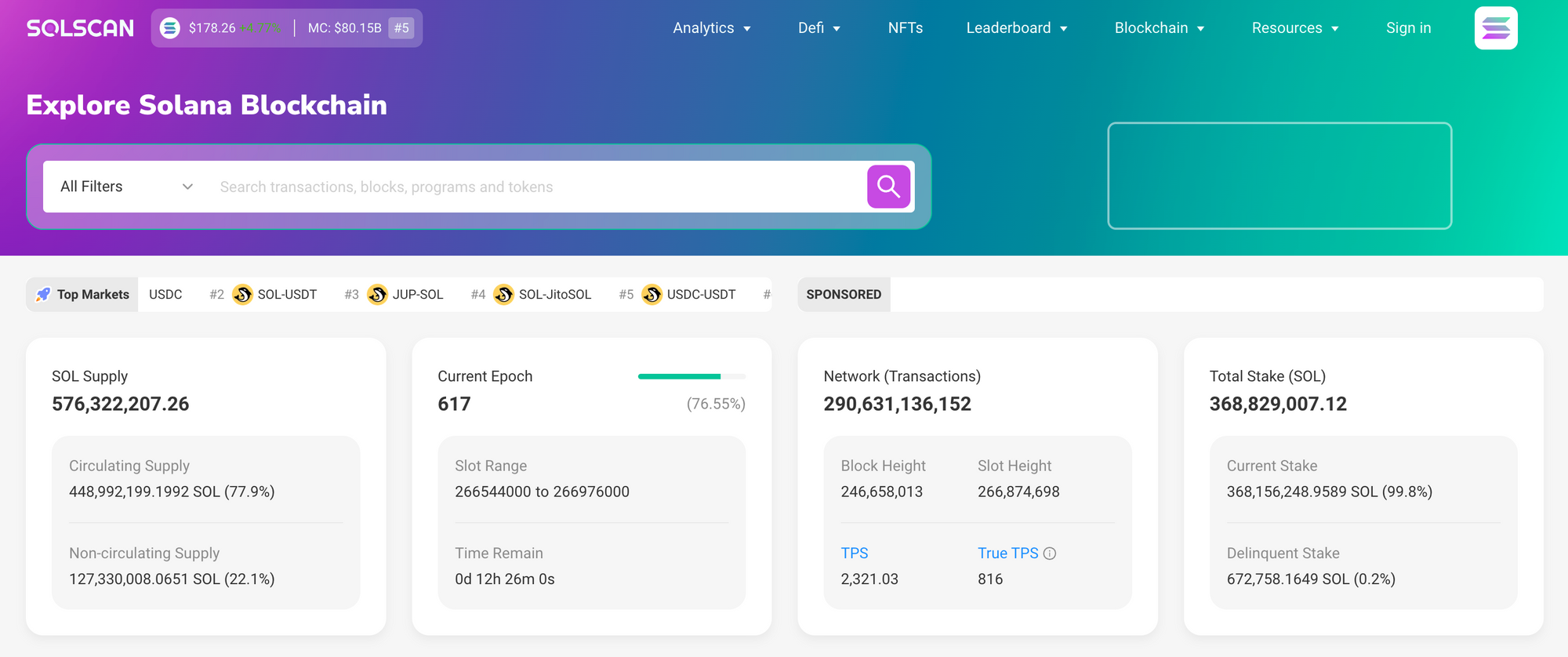
Screenshot of Solscan token and NFT trackers with highlighted features

Where to start with solscan

Okay, so check this out—open the search bar and paste a mint address into the explorer on solscan as your first step. You’ll see supply, token accounts, recent transfers, and a holder distribution chart. From there you can click into any holder to inspect associated transactions, and then trace funds across programs. This is basic but powerful: many scams show clear concentration or repeated wash patterns once you follow the money.

Hmm…

The NFT tracker is different because NFTs carry off-chain baggage—images hosted on IPFS or S3, metadata that mutates, and sometimes a broken link to the artwork. Solscan surfaces metadata and provides collection verification markers so you can see whether a drop is officially tied to a verified creator. On one hand this reduces scams and impostors. Though actually you still need to cross-check contract creators on other sources and be cautious with “verified” stamps, because badge systems can lag behind social engineering attacks.

Okay, so check this out—

You can set alerts for wallet activity and for token transfers on Solscan which is great for monitoring dev wallets or suspected rug moves. I set an alert once and it saved me from buying into a token right before a big dump (oh, and by the way…) which still bugs me. I’m biased, but alerting helps reduce FOMO mistakes, especially when combined with on-chain whale trackers. Pro tip: pair Solscan alerts with a hardware wallet when you follow big accounts.

Whoa!

Developers should love the API endpoints for program logs and token info. You can pull transaction logs, filter by program id, and reconstruct how a swap or mint function executed which is super useful for debugging and audits. Initially I thought the API was only handy for analytics, but then I used it to automate a verification script for tokens I wanted to list in a marketplace. Actually that automation trimmed hours off my checklist and made listings less error-prone.

Here’s what bugs me about explorers in general.

Sometimes historical token transfers are obscured by token account closures or wrapped token patterns that make balances look clean when they’re not. That means relying solely on a simple balance read can be misleading. So dig into token transfer histories, watch for mint/burn events, and read program logs if you need the truth. Don’t trust pretty badges alone.

I’ll be honest—privacy matters to me.

When you monitor wallets the data is public, and that’s both powerful and unnerving. If you prefer some anonymity, consider using multiple wallets, burner addresses for tests, and keep personal funds off accounts you expose to trackers. My instinct said ‘hide the keys’, but that isn’t realistic for active dev work. Balance convenience and hygiene instead.

Practical checklist for using Solscan’s token and NFT trackers.

1) Paste the mint address into the search bar and inspect holder concentration, total supply, and recent transfers. 2) Click ‘Token Accounts’ to see who holds the token and whether any single address dominates. 3) For NFTs, open the metadata tab and verify IPFS links and creator addresses. 4) Use alerts and API hooks to stay informed, not obsessed. 5) Export CSVs when you need an audit trail or to feed analytics.

Some limitations to call out.

Not all metadata is on-chain so an explorer can only show what exists in the on-chain pointers, and sometimes those pointers reference off-chain storage that’s gone or altered. There are rate limits and occasional UI hiccups when Solana is congested. And yes, rare edge cases exist where program logs are cryptic and require deeper forensic work. That means a combination of tools and human judgment is crucial—there’s no single silver bullet.

FAQ

How do I verify a token is legit?

Start with the mint address on Solscan, review holder distribution, check for recent mint activity or large burns, and inspect the creator program logs if available; cross-reference with social channels and official announcements before trusting a claim.

Can I track NFTs that change metadata?

Yes, Solscan will show the on-chain metadata pointer and history, but you must follow the off-chain link (IPFS or S3) to confirm actual media and check whether creators have the ability to mutate metadata—which matters for provenance.

Why I Switched to MT5 (and How I Set It Up Without Losing My Mind)

Whoa, this surprised me. I had used MT4 for years and assumed nothing would beat it. Then I downloaded MetaTrader 5 and my workflow shifted in subtle ways. Initially I thought it was just a prettier UI, but then I realized the architecture actually supports more complex strategies and multi-asset trading. My instinct said, “This could be a real game-changer,” and it turned out to be right—mostly.

Seriously? I know that sounds dramatic. But the expanded order types, depth of market, and native support for equities and futures are meaningful. On one hand you get compatibility with Expert Advisors written for MQL5, though actually converting MT4 EAs sometimes takes a bit of work. I’ll be honest—this part bugs me when a favorite EA needs refactoring. Still, the performance improvements for backtesting multiple symbols at once are very welcome.

Here’s the thing. If you rely heavily on automated systems, MT5’s strategy tester is a big upgrade. You can run multi-threaded historical tests and test across different instruments in one pass, which saves time. Personally I started running portfolio-level optimizations and noticed better signal stability, somethin’ I hadn’t expected. On the downside, some third-party EAs aren’t updated, so compatibility checks are necessary before you switch fully.

Hmm… the installer process itself is straightforward, surprisingly. Download the official installer, run it, and follow the prompts—little hassle for a major tool. Okay, so check this out—if you’re looking to get the installer quickly and safely, I used this link: metatrader 5 download when setting up my test environment, and it worked fine for Windows and Mac options. Be cautious with sources though; only grab installers from reputable broker sites or official distribution pages to avoid unwanted software. Also backup your MQL4 scripts and settings if you plan to migrate, because some custom indicators will need recompile or replacement.

My first few live trades on MT5 felt familiar but smoother. The charting is a little more modern and indicators load faster. I saw lower CPU usage while running multiple graphs and EAs simultaneously, which is nice when you have dozens of tests running overnight. On a day where volatility spikes, I appreciated the faster order execution and clearer DOM data, especially when scalping forex pairs. I’m biased toward tools that reduce friction—this one does that, though it’s not flawless.

So what about Expert Advisors specifically? MQL5 gives you more native functions and a richer standard library, which is great for advanced algos. Initially I thought rewriting an MT4 EA would be quick, but actually, wait—let me rephrase that: simple scripts port quickly, but anything that leans on custom DLLs or platform-specific quirks demands careful rework. The good news is the community and codebase are vast, so chances are someone’s solved your problem already. Still, expect some debugging; it’s very very common to hit small issues at first.

Screenshot showing MetaTrader 5 charts and strategy tester

Practical Setup Tips for Traders

Wow, here’s a short checklist that saved me time. First, install the platform and let it update all the built-in libraries. Second, load your demo account and test EAs in the strategy tester to validate behavior without risking cash. Third, migrate indicators one at a time and compare signals to your old setup, because even tiny calculation differences can matter. Fourth, lock down security: enable two-factor authentication with your broker, and avoid running unknown scripts. Finally, keep a rollback plan in case you need to return to MT4 temporarily—it’s easy to overlook that step.

FAQ

Can I run MT4 EAs on MT5?

Short answer: sometimes—short scripts often work after recompiling, but complex EAs usually need rewriting or adaptation to MQL5 due to different API functions and event models.