Why DeFi on BSC Still Feels Like the Wild West — and How to Track It Better

Whoa!
The BNB Chain moves fast.
Gas is cheap, yields pop up overnight, and projects sprout like dandelions after rain.
My first impression was pure excitement; I jumped into yield farms and token launches with a grin, thinking this was the future served hot and cheap.
But something felt off about the noise and that easy money vibe—there were gaps in visibility, and somethin’ about contract ownerships made me uneasy for reasons I couldn’t name at first.

Really?
Yes really.
DeFi on BSC (BEP-20 tokens and all) is both efficient and risky in equal measure.
Most users see token prices on a dashboard and call it a day, though actually, the real story lives on-chain if you know how to read it.
If you don’t, you can miss rug-pulls, honeypots, or sneaky mint functions hidden in complex contracts that only show up under the hood when you trace transactions.

Whoa!
Here’s what bugs me about a lot of onboarding guides: they simplify too much.
They say swap, stake, earn—done.
On one hand that helps people start quickly; on the other, it’s dangerous, because traders often ignore tokenomics, approvals, and the provenance of liquidity pools.
Initially I thought panic-selling was the main problem, but then realized that blind trust and invisible admin privileges cause far more damage than sudden market moves.

Seriously?
Yep.
I watched a token change its router address overnight and drain liquidity because folks had previously approved unlimited transfers.
My instinct said “check approvals,” but most interfaces bury them—so you need to actively inspect allowance transactions and owner wallet activity.
That takes work, though it’s surprisingly doable if you use a proper explorer and learn which transactions to monitor.

Hmm…
Let me walk through practical steps.
First: always check contract creation and verified source code if available.
Second: scan major transactions—liquidity adds, router approvals, and transfers to dead or centralized addresses.
These actions reveal intent and risk, and they often show patterns that price charts can’t.

Screenshot of a token transfer timeline on an explorer

Where explorers become your best friend

Okay, so check this out—an explorer like bscscan isn’t just a price checker; it’s a forensic toolbox.
You can trace token creation, see who minted tokens, and analyze which wallets hold most of the supply (concentration risk).
I’ll be honest: I sometimes hunt through tx histories like a detective—it’s oddly satisfying.
On that note, wallets that receive large initial allocations and then sell in timed batches are red flags if those wallets are linked to the same owner.

Whoa!
Look for these transaction types first.
Liquidity add events are crucial: did the deployer add liquidity and then lock the LP tokens?
If LP tokens aren’t locked, a rug is trivially possible, and that should influence your risk assessment immediately.
Also, watch for ownership renounces; sometimes they’re genuine decentralization moves, though other times renounces are reversed by clever backdoor code—so read the contract, please.

Really?
Yes, read the contract.
Contract audit badges are nice, but audits vary in rigor and don’t guarantee safety.
On one hand, audits catch obvious exploitable code; on the other, they rarely predict economic design flaws or admin-side rug mechanics.
So audits are a checkpoint, not a certificate of immortality.

Whoa!
Another practical trick: monitor allowances.
Many DEX interactions require approvals, and unlimited allowances are convenient but dangerous.
Periodically revoke them (or set lower limits) if you don’t plan to interact with a contract frequently—this reduces the blast radius of a compromised app.
Some wallets and extensions automate allowance checks, though I still prefer cross-checking on-chain approvals manually when I feel uneasy.

Hmm…
Transaction tracing is a high-signal activity.
Start at the token contract page, then open the “Transactions” and “Token Transfers” tabs to spot large movements.
If you see frequent transfers to a small set of addresses, that’s concentration.
If those addresses are active traders or black-hole burn addresses, that’s different, but do your homework.

Whoa!
One more nuance: tokenomics can be sneaky.
Many tokens add transfer taxes, reflection mechanics, or auto-liquidity, which sound great but affect usability and arbitrage.
For instance, high sell taxes disincentivize sellers but also trap liquidity and can break market-making bots, which in turn increases slippage and volatility.
I’m biased toward cleaner token models, though some innovative tax systems work when transparently explained and fairly implemented.

Really?
Absolutely.
On the topic of BSC transactions, watch for unusually timed transfers—same-delays, identical amounts, or gas-fee patterns often indicate bots or coordinated dumps.
Tools that visualize mempool behavior and transaction batching help reveal these patterns, but you can spot some of it by eye if you check recent blocks and pending txs.
It’s messy, and very very human errors happen in the process, but the payoff is being able to avoid being on the wrong side of a coordinated exit.

Common questions I get

How do I verify a BEP-20 contract is safe?

Start by checking if the source code is verified, then scan deployer transactions, ownership transfers, and LP token locks.
Look for common admin functions like mint, burn, or blacklist, and read the code around them (or ask someone who can read Solidity).
Also, check token holder distribution—extreme concentration is a risk, and repeatedly watch for transfers to central wallets before major sells.

What should I do if I see a suspicious transaction?

Pause.
Don’t interact more.
Trace where funds go, identify related addresses, and search for earlier patterns that match.
If it’s clearly malicious, report the addresses to community channels and, if possible, share findings with an explorer’s reporting feature to warn others.

Reading DeFi Charts Like a Trader: Liquidity, Charts, and the Tools That Actually Help

Whoa, that wick was wild. I was staring at the liquidity map trying to make sense. Trades were spiking while depth seemed shallow across pools. Initially I thought this was just noise from bots, but over several blocks the pattern repeated and my gut said somethin’ else. It felt like hidden liquidity was being teased out slowly.

Really, prices barely moved, very very. Yet on-chain traces showed aggressive maker-side reads pinging several new token pools. That’s when I opened a real-time DEX chart and started tracing liquidity shifts. Actually, wait—let me rephrase that: initially I thought this was some arbitrage noise, but linking orderbook snapshots to pool balances proved otherwise and forced me to rethink entries. My instinct said headline volume felt deceptive and unstable.

Hmm… this one stuck with me. Liquidity analysis isn’t glamorous, but it’s where true edge lives for many DEX traders. I dug into price impact curves, tick spacing, and slippage profiles across AMM versions. On one hand concentrated liquidity on v3-style pools can dramatically reduce slippage for passive LPs, though actually those same concentrations can create cliff edges where a single large pull can wipe out apparent depth and cause cascading price moves. This part bugs me because UI charts often smooth over those cliffs.

Okay, so check this out— I started combining multi-timeframe liquidity views with trade heatmaps to filter false signals. Chart overlays that show reserved depth, pending limit liquidity, and active taker flow helped a lot. Initially I favored a single dashboard, but then realized that combining granular pool diagnostics with broader market heatmaps is far more robust for timing entries and exits under stress. I’m biased toward tools that let me slice data quickly.

Wow, watch that liquidity shift. Check this image—it’s messy, but tells a story about token flow. I captured pool snapshots before and after a large swap, and depth vanished in minutes. When you layer trade origin IP clustering (where available), router patterns, and on-chain event timing, you start to separate genuine demand from bot-led wash activity, which is crucial if you’re trying to avoid false breakouts that eat your stop losses. Somethin’ about that is comforting once you see it.

Screenshot of pre- and post-swap liquidity depth showing a rapid drop in pool reserves

Why the right charts matter

Here’s the thing. I lean on dexscreener for quick token scans and live liquidity reads. It surfaces pools, charts, and trade flow without making you click ten menus. Initially I thought it was just another aggregator, but after customizing alerts for sudden depth changes and overlaying time-weighted liquidity metrics, it became a go-to for pre-trade checks when speed matters most. Not perfect, but definitely a multiplier for situational awareness.

Seriously, don’t ignore orderflow. If you care about execution costs, read beyond candlesticks into depth. Markers like depth delta and maker-taker imbalance reveal stress earlier. On one hand it’s tempting to overfit strategies to backtests that ignore execution friction, though on the other hand the right real-time overlays prevent you from stepping into traps during thin liquidity windows, which is invaluable when trading mid-cap tokens. I’m not 100% sure about every metric, but these have helped me cut bad fills.

Quick FAQ

How do I use charts to avoid liquidity traps?

I’ll be honest. How do I use charts to avoid liquidity traps? Watch depth and slippage bands across multiple pools before sizing. Pay attention to taker flow spikes and router changes over short windows. On paper it sounds simple, though in practice you need a workflow that alerts you to sudden depth erosion, correlates that with executed trade sizes, and then helps you decide whether to scale in, hedge, or step back until liquidity recovers.

What I Wish I’d Known About Downloading Word and Getting the Most from Microsoft Office

Whoa! That download button looks simple. Really simple. But the first time I tried to grab Word I ran into a mess of versions, licensing choices, and the classic “which one do I actually need?” panic. My instinct said: just get the single app. Then reality hit—compatibility, updates, fonts, and the suite’s bundled tools matter more than you think.

Okay, so check this out—Word is just the tip of the iceberg. Microsoft Office is an ecosystem. Some folks want a one-off word download for a quick edit. Others need the whole suite for collaboration, Excel power, or Outlook mail rules. I’m biased toward getting the suite when you plan to work across devices. It just saves headaches later.

At first I thought the cheapest path was fine. But then I realized you can lose a lot of productivity by skimping. For example, track changes and cloud autosave behave differently depending on whether you have a subscription or the perpetual license. On one hand you might save money up front; on the other hand you could waste hours wrestling with file versions, and that bugs me. Hmm… that cost math isn’t always obvious.

A laptop screen showing Microsoft Word document with toolbar highlighted

Which Word download should you pick?

Short answer: it depends. Long answer: who you are, where you work, and what devices you use. If you’re often switching between a Mac and a Windows PC (or a phone), the Microsoft 365 subscription usually gives better device syncing and updates. If you only edit documents on one desktop and hate monthly fees, the Office 2021 perpetual license might be your jam. I’m not 100% sure about every edge case, but here’s how I think through it.

First, list your must-haves. Do you need co-authoring in real time? Do you use heavy Excel macros or Access databases? Do you rely on version history in OneDrive? Those things push you toward the subscription. Oh, and if IT at your company manages licensing, check with them first—save yourself a very very important headache.

Another practical point: installation method. Microsoft now pushes an online installer for Microsoft 365, which downloads components as needed. That can be faster, but if you have flaky Wi‑Fi the offline installer (available for certain versions) is often a lifesaver. Pro tip: bookmark where you downloaded your installer or save the installer file—trust me, somethin’ about reinstalling later always comes up.

Getting the download safely

I’m going to be blunt: dodgy downloads are everywhere. Seriously? Yes. If you’re looking for a clean microsoft office download, stick to official sources or verified resellers. For convenience, here’s a place I often reference when guiding people through the process—it’s a straightforward link that leads you to the installer page where you can choose the version that suits you: microsoft office download. Read the license, confirm the edition, and follow the prompts.

Why that link? Because it’s structured like the installer pages I walk people through. But okay—always cross-check with Microsoft’s official support pages if you’re unsure about license keys or activation quirks. Activation can be the part that derails a fresh install, especially for older perpetual keys or volume licenses (oh, and by the way… keep a screenshot of your product key activation step).

Install tips: disable antivirus briefly if the installer complains (re-enable after), sign in with the Microsoft account tied to your license, and set up OneDrive early if you plan to use cloud autosave. If you skip OneDrive, you might miss version history that could rescue a file later.

Productivity software habits that actually help

One thing that improved my workflow instantly: custom templates and quick access toolbar tweaks. Small changes there shave minutes off repetitive tasks — minutes that add up. Create a template for your common doc types. Record a macro for multi-step formatting. Use Styles consistently (not manual formatting). These sound basic, but they separate amateurs from people who deliver polished docs quickly.

Another habit: use keyboard shortcuts. Seriously, learning Ctrl/Cmd + Shift + S (save as) and Alt + Q (tell me what you want to do) is low effort, high payoff. Also, explore Researcher and Editor (in recent Word versions) — they help tidy drafts faster than manual proofreading.

Collaboration note: if you co-author a document, accept that things will be messy sometimes. Track changes, comments, and Resolve Comments are your friends. Train your team on a simple workflow: comment threads for discussion, edits in tracked changes, and a designated approver to finalize the doc. On one hand it feels bureaucratic; though actually, it saves hours and email chaos.

FAQ

Can I download Word without buying the whole Office suite?

Technically yes, via Microsoft’s apps for mobile or the web-based Word for the browser, and some standalone desktop options exist through certain licensing plans. But most times, the subscription or suite gives better features and ongoing updates.

Is it safe to download from third-party sites?

Exercise caution. Legitimate resellers exist, but many third-party downloads bundle unwanted software or fake keys. Stick to trusted sources or official channels when possible.

How do I choose between Microsoft 365 and Office 2021?

Choose Microsoft 365 if you want continuous updates, cloud features, and cross-device access. Choose Office 2021 if you prefer a one-time purchase and stable feature set. Your use case (collaboration vs. standalone) will usually decide it.

Why NFTs, Phantom, and Staking on Solana Feel Like the Next Big UX Fight

Wow! So I was thinking about NFTs on Solana recently. They feel fast and cheap compared with a lot of alternatives. My first impression was pure excitement, though somethin’ felt off about the UX and wallet flows. Yet the community energy keeps drawing me back to the chain.

Whoa! NFT drops still move quickly and often reward early believers. But there are tradeoffs, and sometimes the tools for beginners are rough. Initially I thought gas and fees were the whole story, but then realized that wallet design and discoverability matter even more for mainstream adoption. On one hand low transaction costs let creators experiment with editions and interactive mints, though actually the secondary markets and metadata standards still need care and clearer conventions that developers and wallets have to coordinate on.

Seriously? Phantom has been central to that discussion in recent years. Users want a seamless web experience without juggling seed phrases every time. And yes I use wallets all the time, I’m biased but practicality matters to me. If a web version removes friction and still preserves custody for the user, that could be a real tipping point for onboarding, though there are thorny security questions to answer around browser contexts and extension models.

Hmm… Okay, so check this out—there is a web-focused phantom web experience that people ask about. The curious thing is how that interacts with NFTs and staking in a single flow. Wallets must show assets, let you sign safely, and explain staking without overwhelming new users. Building those UX patterns means thinking about device recovery, cross-origin security, and how to present delegation rewards in a way that feels both trustworthy and simple even for people who are just learning about nodes and validators.

Screenshot of a Phantom web wallet showcasing NFTs and staking options

Here’s the thing. Staking SOL deserves a better narrative and clearer incentives for newcomers. Right now rewards, lockups, and validator choices confuse people. When Phantom (or a web counterpart) can let users stake directly from their browser without copying commands, and while still preserving private key control through secure enclaves or account abstraction, the experience changes dramatically and retention improves. There are complications though, like how validators report performance, how slashing risks are communicated, and whether liquid staking derivatives are presented as optional or default, all of which require careful product and community governance decisions.

Whoa! NFT marketplaces on Solana have matured, but UX inconsistencies persist. Minting interfaces vary and metadata displays can be misleading. A web wallet that surfaces traits and provenance helps collectors decide faster. From a developer standpoint, integrating wallet adapters for the web, handling RPC load, and standardizing metadata are all tasks that need coordination between projects, marketplaces, and infrastructure providers before a truly smooth experience appears.

Really? I like the direction, but this part bugs me. Sometimes wallets add features in isolation, creating fragmented experiences where one app shows royalties and another hides them, and that inconsistency undermines trust, especially when buyers don’t know why prices vary between platforms. On the other hand, sync between marketplaces, better metadata curation, and clearer UI for royalties could restore confidence, although the work requires both engineering and thoughtful economic modeling to avoid unintended incentives. Honestly, governance and standards play a big role here across ecosystems.

I’m biased, but… If web wallets learn to show clear staking ROI and validator reputations, adoption could accelerate. I tried a few prototypes and some flows felt intuitive. Actually, wait—let me rephrase that: prototypes show promise but edge cases around account recovery, multi-device syncing, and phishing protections need real engineering work and thoughtful UX to avoid giving users a false sense of safety. So where does that leave creators and collectors who want simpler tools and clearer fees?

Practical takeaways and a few honest confessions

Creators should think about edition strategies that aren’t gas-taxing and should embed clear provenance in metadata. Collectors ought to prefer wallets that expose provenance and validator info in the UI, and always double-check signing prompts. I’m not 100% sure, but bridging novice-friendly web flows with secure custody is solvable if teams prioritize standards and shared libraries. Oh, and by the way, somethin’ about onboarding that nudges users into staking right after a mint could be powerful (but also risky if miscommunicated).

FAQ

Can I buy NFTs on Solana with a web wallet safely?

Yes, you can, but safety depends on the wallet’s signing UX, the provenance shown for the asset, and whether you confirm transactions on a trusted device; always verify domain names and never paste seeds into sites.

Is staking SOL through a web wallet secure?

It can be, if the wallet preserves key custody, provides clear validator metrics, and educates users about rewards and risks; still, recovery options and phishing protections are the hard parts that need real attention.

How I Started Staking SOL Through a Web Phantom Wallet (and What Surprised Me)

Whoa!

I’m thinking about web wallets on Solana today, honestly.

So many folks ask for a pure web experience over extensions or mobile apps.

Initially I thought browser wallets were mostly for quick trades, but then I saw how staking flows and account recovery actually change when you remove native clients and lean on web-based UI and remote key handlers.

This is about staking SOL through a Phantom-like web interface, and why it matters to regular users.

Really?

Yes, staking with a web wallet can be smoother than you expect.

My instinct said it would be riskier, but that was only half true, so I dug deeper.

On one hand a web app reduces friction and on the other hand it forces trade-offs in threat modeling that many tutorials skip over.

I’ll be honest—some parts bug me, and some parts surprised me in a good way.

Hmm…

To start, you need a wallet that handles keys securely in the browser.

Not all implementations are equal, and UX decisions hide security implications under the hood.

At first glance a web Phantom feels like a lightweight extension, though actually the architecture differs when key material is exposed in window contexts or delegated to secure iframes or hardware signers.

That difference determines how you stake, how you revoke permissions, and how you recover accounts after a lost device.

Whoa!

Staking SOL itself is conceptually simple—delegate your SOL to a validator and earn rewards.

But the devil lives in delegation transactions, rent exemptions, and unstake epochs.

When you do this from a web wallet the UX must nudge users to manage bloom phases, vote-credits, and commission rates, or otherwise people pick high-commission validators and wonder why rewards feel low.

There are sensible defaults, but if you want better yields you need to vet validators beyond the UI’s basic list.

Seriously?

Yes, and here’s a practical point—slashing risk on Solana is low, but you should still understand validator health metrics.

My working approach is: check uptime, check leader credits, and prefer decentralization over tiny commission wins.

Initially I thought focusing on commission was enough, but then I realized a balanced node selection reduces long-term downtime exposure and helps the network.

So pick validators like you pick local coffee spots—not just cheap, but reliable and aligned with community values (oh, and by the way, I like Brooklyn roasters).

Whoa!

Security patterns change on the web; content scripts and cross-site frames matter.

Something felt off about copy-paste recovery flows when I tested them across browsers.

Actually, wait—let me rephrase that: it’s not that web wallets are inherently unsafe, it’s that the attack surface shifts from OS-level malware to browser scripting and malicious third-party scripts, and you have to plan for that differently.

So keep your seed phrase offline, use hardware wallets if possible, and treat web wallets as one layer in a layered defense.

Hmm…

Now about Phantom specifically—there are web implementations aiming to preserve the feel of the native extension while running entirely in web contexts.

Some projects offer a hosted web version that mirrors extension features and integrates staking screens for SOL with a few clicks.

My instinct said feature parity would be easy, but real parity requires careful crypto plumbing: signature flows, transaction serialization, and nonce handling must behave identical across environments to avoid subtle bugs.

That means thorough testing across wallets and validators when you stake from a web interface.

Screenshot concept: Phantom web staking flow with validator list and reward chart

Trying a Web Phantom Wallet for Staking

Here’s the bit where I tried a web-hosted interface and wrote down how it felt.

First impression: the onboarding was fast and the UI empathized with new users, but some advanced settings were hidden behind menus.

My approach was pragmatic—set up a watching account, transfer a small amount of SOL, delegate to a trusted validator, and monitor rewards over a couple of epochs.

For folks looking for this kind of web experience, check out a web-hosted build like the phantom wallet which mirrors many familiar flows without forcing an extension install.

I’m biased, but the seamlessness felt good while I kept a hardware key on standby for signing important ops.

Whoa!

There are a few UX pitfalls to watch for with web staking flows.

One is hidden fees—some interfaces abstract transaction costs so users think staking is free, which it isn’t: there are lamport-level rents and occasional fee spikes during congestion.

Another is unclear unstake timelines; SOL uses epochs and unstaking isn’t instant, and missing that detail causes anxiety for new users.

So educate your users, or better yet, design the interface to make the waiting obvious and predictable.

Really?

Yes—monitoring and alerts matter, and the web provides creative hooks like browser notifications and dashboard widgets to make staking feel alive.

But those hooks create permission surfaces; ask for the minimal permissions and avoid persistent background privileges unless strictly necessary.

My instinct told me to prioritize transparency and reversibility: allow users to revoke delegations, clear sign requests, and view prior transactions without confusion.

Somethin’ about a clear activity log gives users confidence—very very important.

Hmm…

To wrap this ongoing thought: web-based Phantom experiences can make staking accessible to more people while keeping power in users’ hands.

On one hand they collapse friction and invite mainstream users; on the other hand they require deliberate security and educational design choices so people don’t misuse them.

I’ll be honest, I’m not 100% sure every web implementation is ready for mass adoption, though many are getting close with hardware integrations and better UX flows.

Keep experimenting, keep thinking about trade-offs, and if you try a web wallet start small and scale up as confidence grows…

FAQ

Can I stake SOL safely from a web wallet?

Yes you can stake safely if you follow best practices: keep seed phrases offline, prefer hardware signing for large amounts, and choose reliable validators based on uptime and commission.

What are the main risks of a web-based Phantom experience?

The main risks are browser-based attacks, script injection, and unclear permission models, so minimize permissions, use reputable builds, and double-check transactions before signing.

Why Your Charts Should Do More Than Pretty Lines: Real Talk on Advanced Charting for Traders

Okay, so check this out—I’ve been messing with charting platforms for years, and honestly the gap between what they promise and what they actually deliver still surprises me. Wow! The first time I loaded a multi-timeframe layout on a laptop and then mirrored it to a tablet, something clicked; charts stopped being static pictures and started behaving like living dashboards. My instinct said: if the tools feel alive, your analysis gets sharper. Initially I thought flashy indicators were everything, but then I realized clarity and workflow trump bells and whistles every time.

Seriously? A lot of traders chase indicator overload. Hmm… They layer ten oscillators and then complain the screen looks like modern art. Here’s what bugs me about that approach: complexity often disguises poor process. On one hand more data can reveal nuance, though actually too many signals just dilute true edge and slow decision-making.

Let me be blunt—charting platforms are utility tools, not trophies. Really? You need speed and predictability from them. My early setups were slow, clunky, and crashed mid-session; it taught me to value reliability over flash. Something felt off about relying on a platform that couldn’t keep up during volatile sessions, and I swapped ideologies—less spectacle, more stability.

Screenshot of layered crypto charts with indicators and price action notes

How to think about charting tools like a trader, not a tourist

Whoa! Start with the workflow, not the indicator list. A clean layout that supports quick pattern recognition matters more than customizing 30 colors and 50 moving averages. My rule of thumb: if it adds friction to decision execution, it’s junk. I’m biased, but I prefer a few well-tuned studies and fast template switching; somethin’ about muscle memory makes trades less chaotic.

Okay, quick practical bit—use a platform that supports multi-timeframe analysis and synced drawing tools. That means you mark a key level on a 4-hour and it appears on the 15-minute without manual tweaking. Really? It sounds small, but it saves minutes and prevents mistakes under pressure. If your platform lacks precise hotkeys or sync features, you’re fighting the software during live trades.

Here’s the thing. When volatility ramps up, execution windows vanish fast. Wow! You want charting that gives clean visuals, one-click order entries, and reliable alerts that don’t spam you. My instinct said alerts were overrated, yet properly tuned ones are life-savers during overnight moves. Initially I thought more alerts were better, but then realized that well-filtered alerts preserve attention and reduce costly distractions.

Practical features that actually matter (and why)

Shortcuts and hotkeys. Quickly toggling crosshairs or drawing a Fibonacci retracement can shave seconds off setup time. Really? Seconds become money in active sessions. If your tool lets you remap keys and save templates, you reduce cognitive load and avoid repeated setup errors.

Custom scripting and backtesting. Hmm… Many platforms boast scripting engines, but not all offer robust backtests with realistic assumptions. Here’s where nuance matters: the ability to simulate slippage, variable commissions, and order types separates toy tests from plausible scenarios. I’m not 100% sure every trader needs deep scripting, though if you want to develop a repeatable edge, it’s invaluable.

Data fidelity and feed selection. Wow! Crypto charts need different handling than equities due to exchange fragmentation. On one hand unified feeds simplify things, but on the other hand you lose exchange-specific quirks that sometimes create edge. Actually, wait—let me rephrase that: choose a platform that gives you granular exchange data when you need it, and aggregated views when you don’t.

Why chart customization is deceptively important

Here’s the thing. Colors and fonts are not vanity; they’re cognitive aids. Seriously? Picking a color scheme that reduces eye strain matters during long sessions. My eyes felt less fatigued after switching to a high-contrast layout, which made trendlines and volume profiles pop. Small design choices keep you focused, and focus preserves discipline, which is very very important.

Annotations and layout persistence. Wow! Being able to attach notes to specific bars and have those notes sync across devices is underrated. For example, tagging price action with “failed breakout” or “volume divergence” helps you revisit decisions later without guessing what you were thinking. I’m biased toward platforms that save workspaces automatically—losing annotations mid-analysis still irks me.

Order integration. Hmm… I used to analyze on one platform and execute on another, and it was painful. One-click entries, OCO orders, and partial-fill support streamline the workflow. Initially I thought analysis and execution could be separate, but then live slippage taught me otherwise—simplicity reduces friction and errors.

Where crypto charts need special attention

Crypto markets run 24/7 and manifest unique liquidity behavior. Really? That means traditional indicators tuned to stock hours can lag or mislead. My experience trading altcoins taught me to adjust ATR and volatility filters dynamically. On one hand patterns can repeat, though actually their repeatability varies across market cycles and tokens.

Watch for exchange-level idiosyncrasies and wash trading distortions. Wow! A single exchange’s orderbook can give a false sense of supply and demand if you don’t cross-check aggregated data. Something felt off the first time a token showed a sudden imbalance; digging into the orderbook uncovered spoofing that skewed the chart. Back then I lost small money and learned to verify.

One tool I keep recommending

I won’t pretend there’s a one-size-fits-all, but for traders who want a fast, extensible charting environment that accommodates both crypto and traditional markets, check this out—I’ve regularly suggested a platform that balances speed, community scripts, and clean UX. Here I’m embedding a link to a helpful source for getting the desktop client via an easy tradingview download when you want a quick install. Wow! The first run setup is simple and the community indicators are a solid starting point.

Be mindful: community scripts are a starting point, not gospel. Hmm… I often fork a script and simplify it rather than adopting it wholesale. Initially I thought more complexity equaled better performance, but then I learned that clarity and explainability help when things go sideways.

FAQ

Do pro-level indicators beat price action?

Short answer: no magic. Price action remains the backbone of technical analysis, and indicators should complement, not replace, price structure. I’m biased, but I prefer setups where indicators confirm observed price behavior rather than dictate it. On the other hand, indicators are useful for filtering and timing—balance both.

Is multi-device sync necessary?

Yes if you trade across devices. Seriously? Sync saves time and reduces mistakes. If you often switch between desktop and mobile, ensure your platform preserves chart states, drawings, and alerts reliably. Losing a drawn trendline mid-session has bitten me more than once, so I trust platforms that autosave.

Okay, parting thought—build your charts around decisions, not aesthetics. Wow! Make them fast, predictable, and explanatory. I’m not 100% sure any single setup will suit everyone, though if you prioritize workflow, reliability, and clear price context, your analysis will be sharper and your behavior more disciplined. Something to experiment with: simplify, then add what actually improves outcomes, not what just looks cool…

How I Use Solscan to Track Tokens and NFTs (and Why It Actually Helps)

Whoa!

I remember the first time I trawled through Solana tx history and felt confused. The blockchain moves fast and you need tools that keep up. Solscan is one of those tools. But there’s a lot going on under the hood—token flows, mints, burns, NFT metadata updates, and on-chain interactions that tell stories if you know where to look.

Seriously?

If you’re watching a new SPL mint, a token tracker saves hours. The same goes for NFTs, where ownership, metadata and verified collections can be messy and misleading. On Solscan you can inspect token accounts, search by mint address, and see holder distributions. That visibility matters because fake mints and lazy metadata are everywhere, and somethin’ about raw on-chain clarity just helps you sleep at night.

Here’s the thing.

I use the token tracker daily to trace airdrops and confirm legitimacy. Initially I thought the dashboard was just a prettier block explorer, but then I dug into holder charts and realized you can spot concentration risks fast. Actually, wait—let me rephrase that: the visuals guide you, but the numbers tell the real story. So, quick wins: look at top holders, check token supply changes, and scan for odd transfer patterns.

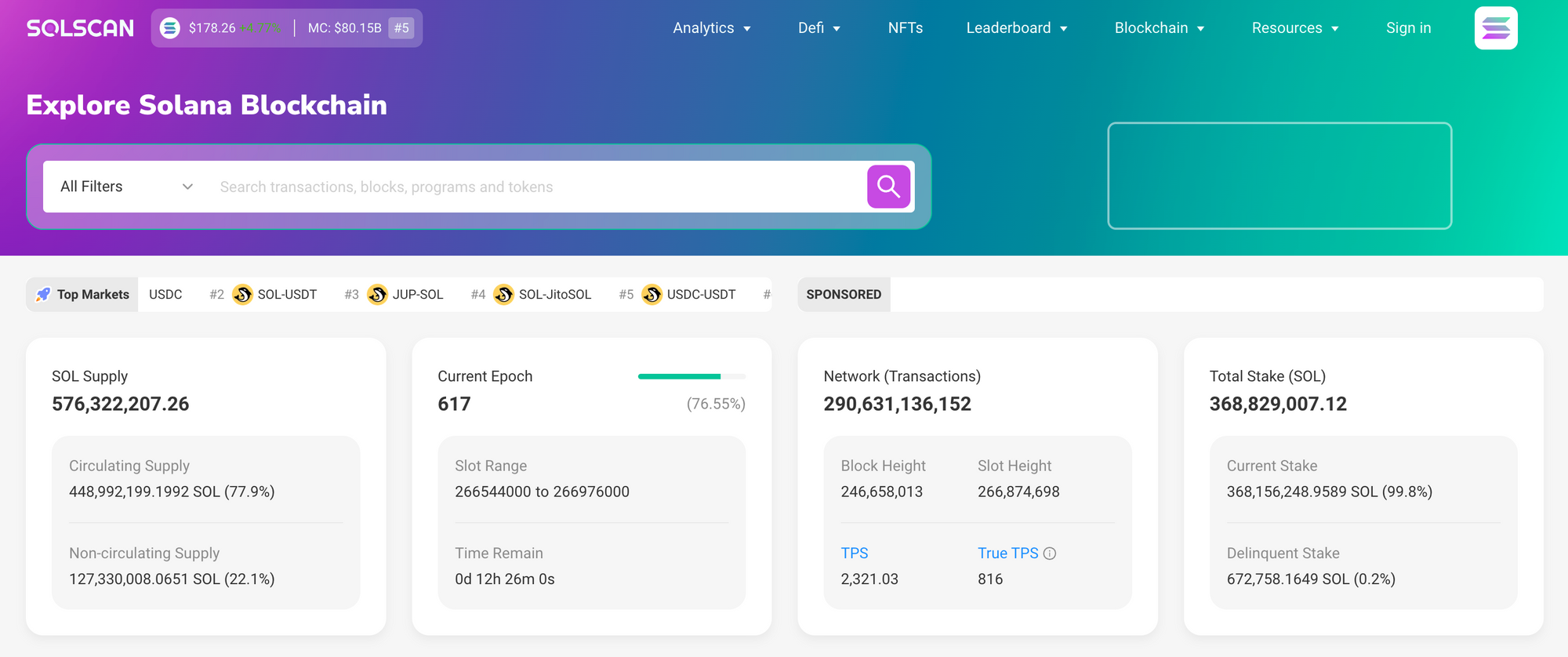
Screenshot of Solscan token and NFT trackers with highlighted features

Where to start with solscan

Okay, so check this out—open the search bar and paste a mint address into the explorer on solscan as your first step. You’ll see supply, token accounts, recent transfers, and a holder distribution chart. From there you can click into any holder to inspect associated transactions, and then trace funds across programs. This is basic but powerful: many scams show clear concentration or repeated wash patterns once you follow the money.

Hmm…

The NFT tracker is different because NFTs carry off-chain baggage—images hosted on IPFS or S3, metadata that mutates, and sometimes a broken link to the artwork. Solscan surfaces metadata and provides collection verification markers so you can see whether a drop is officially tied to a verified creator. On one hand this reduces scams and impostors. Though actually you still need to cross-check contract creators on other sources and be cautious with “verified” stamps, because badge systems can lag behind social engineering attacks.

Okay, so check this out—

You can set alerts for wallet activity and for token transfers on Solscan which is great for monitoring dev wallets or suspected rug moves. I set an alert once and it saved me from buying into a token right before a big dump (oh, and by the way…) which still bugs me. I’m biased, but alerting helps reduce FOMO mistakes, especially when combined with on-chain whale trackers. Pro tip: pair Solscan alerts with a hardware wallet when you follow big accounts.

Whoa!

Developers should love the API endpoints for program logs and token info. You can pull transaction logs, filter by program id, and reconstruct how a swap or mint function executed which is super useful for debugging and audits. Initially I thought the API was only handy for analytics, but then I used it to automate a verification script for tokens I wanted to list in a marketplace. Actually that automation trimmed hours off my checklist and made listings less error-prone.

Here’s what bugs me about explorers in general.

Sometimes historical token transfers are obscured by token account closures or wrapped token patterns that make balances look clean when they’re not. That means relying solely on a simple balance read can be misleading. So dig into token transfer histories, watch for mint/burn events, and read program logs if you need the truth. Don’t trust pretty badges alone.

I’ll be honest—privacy matters to me.

When you monitor wallets the data is public, and that’s both powerful and unnerving. If you prefer some anonymity, consider using multiple wallets, burner addresses for tests, and keep personal funds off accounts you expose to trackers. My instinct said ‘hide the keys’, but that isn’t realistic for active dev work. Balance convenience and hygiene instead.

Practical checklist for using Solscan’s token and NFT trackers.

1) Paste the mint address into the search bar and inspect holder concentration, total supply, and recent transfers. 2) Click ‘Token Accounts’ to see who holds the token and whether any single address dominates. 3) For NFTs, open the metadata tab and verify IPFS links and creator addresses. 4) Use alerts and API hooks to stay informed, not obsessed. 5) Export CSVs when you need an audit trail or to feed analytics.

Some limitations to call out.

Not all metadata is on-chain so an explorer can only show what exists in the on-chain pointers, and sometimes those pointers reference off-chain storage that’s gone or altered. There are rate limits and occasional UI hiccups when Solana is congested. And yes, rare edge cases exist where program logs are cryptic and require deeper forensic work. That means a combination of tools and human judgment is crucial—there’s no single silver bullet.

FAQ

How do I verify a token is legit?

Start with the mint address on Solscan, review holder distribution, check for recent mint activity or large burns, and inspect the creator program logs if available; cross-reference with social channels and official announcements before trusting a claim.

Can I track NFTs that change metadata?

Yes, Solscan will show the on-chain metadata pointer and history, but you must follow the off-chain link (IPFS or S3) to confirm actual media and check whether creators have the ability to mutate metadata—which matters for provenance.

Why I Switched to MT5 (and How I Set It Up Without Losing My Mind)

Whoa, this surprised me. I had used MT4 for years and assumed nothing would beat it. Then I downloaded MetaTrader 5 and my workflow shifted in subtle ways. Initially I thought it was just a prettier UI, but then I realized the architecture actually supports more complex strategies and multi-asset trading. My instinct said, “This could be a real game-changer,” and it turned out to be right—mostly.

Seriously? I know that sounds dramatic. But the expanded order types, depth of market, and native support for equities and futures are meaningful. On one hand you get compatibility with Expert Advisors written for MQL5, though actually converting MT4 EAs sometimes takes a bit of work. I’ll be honest—this part bugs me when a favorite EA needs refactoring. Still, the performance improvements for backtesting multiple symbols at once are very welcome.

Here’s the thing. If you rely heavily on automated systems, MT5’s strategy tester is a big upgrade. You can run multi-threaded historical tests and test across different instruments in one pass, which saves time. Personally I started running portfolio-level optimizations and noticed better signal stability, somethin’ I hadn’t expected. On the downside, some third-party EAs aren’t updated, so compatibility checks are necessary before you switch fully.

Hmm… the installer process itself is straightforward, surprisingly. Download the official installer, run it, and follow the prompts—little hassle for a major tool. Okay, so check this out—if you’re looking to get the installer quickly and safely, I used this link: metatrader 5 download when setting up my test environment, and it worked fine for Windows and Mac options. Be cautious with sources though; only grab installers from reputable broker sites or official distribution pages to avoid unwanted software. Also backup your MQL4 scripts and settings if you plan to migrate, because some custom indicators will need recompile or replacement.

My first few live trades on MT5 felt familiar but smoother. The charting is a little more modern and indicators load faster. I saw lower CPU usage while running multiple graphs and EAs simultaneously, which is nice when you have dozens of tests running overnight. On a day where volatility spikes, I appreciated the faster order execution and clearer DOM data, especially when scalping forex pairs. I’m biased toward tools that reduce friction—this one does that, though it’s not flawless.

So what about Expert Advisors specifically? MQL5 gives you more native functions and a richer standard library, which is great for advanced algos. Initially I thought rewriting an MT4 EA would be quick, but actually, wait—let me rephrase that: simple scripts port quickly, but anything that leans on custom DLLs or platform-specific quirks demands careful rework. The good news is the community and codebase are vast, so chances are someone’s solved your problem already. Still, expect some debugging; it’s very very common to hit small issues at first.

Screenshot showing MetaTrader 5 charts and strategy tester

Practical Setup Tips for Traders

Wow, here’s a short checklist that saved me time. First, install the platform and let it update all the built-in libraries. Second, load your demo account and test EAs in the strategy tester to validate behavior without risking cash. Third, migrate indicators one at a time and compare signals to your old setup, because even tiny calculation differences can matter. Fourth, lock down security: enable two-factor authentication with your broker, and avoid running unknown scripts. Finally, keep a rollback plan in case you need to return to MT4 temporarily—it’s easy to overlook that step.

FAQ

Can I run MT4 EAs on MT5?

Short answer: sometimes—short scripts often work after recompiling, but complex EAs usually need rewriting or adaptation to MQL5 due to different API functions and event models.

Santander i ibiznes24 — jak bezpiecznie i szybko logować się do bankowości firmowej

Właśnie — to temat, który ciągle wraca przy kawie z księgową. Hmm… dużo firm w PL nadal ma wątpliwości co do bezpiecznego logowania. Krótko: dostęp do bankowości korporacyjnej wymaga uwagi. Serio. Moja krótka obserwacja z praktyki: wiele problemów wynika nie z systemu bankowego, a z nawyków użytkowników. Początkowo myślałem, że problemem są tylko stare przeglądarki, ale potem zorientowałem się, że to raczej mieszanka rutyny, presji czasu i złych praktyk IT.

Okej, więc check this out — opiszę, co warto wiedzieć o Santander Business i o samym logowaniu do platformy ibiznes24, na co zwracać uwagę, i jak szybko rozwiązać typowe zawirowania. Będą wskazówki praktyczne, trochę anegdot (bo bez tego nudno), oraz FAQ na końcu. Nie obiecuję cudów, ale dam konkretne kroki. (oh, and by the way… jeśli szukasz szybkiego wejścia do panelu, możesz skorzystać z tej strony: ibiznes24 )

Najpierw parę zdań o tym, jak Santander organizuje dostęp dla firm. Platforma business zwykle oferuje: role i uprawnienia dla użytkowników, uwierzytelnianie wieloskładnikowe (tokeny, SMS, aplikacja mobilna), raportowanie transakcji, integracje z systemami księgowymi oraz opcje ograniczeń czasowych i geograficznych dla przelewów. Brzmi prosto, ale w praktyce administracja uprawnieniami to kopalnia potencjalnych błędów — zwłaszcza gdy właściciel firmy nie rozumie różnicy między “użytkownik” a “pełny pełnomocnik”.

Krótki przykład z życia. MŚP, 8 osób, jedno konto firmowe. Ktoś logował się z prywatnego laptopa, ktoś inny korzystał z publicznego Wi‑Fi. Boom — opóźnione przelewy, błędne blokady. Wow! Trzeba ustalić jasne zasady. Moim zdaniem najważniejsze są trzy rzeczy: kontrola dostępu, silne uwierzytelnianie i procedury w awarii. Prosto powiedziane. Trochę trudniej wdrożyć.

Pulpit logowania Santander ibiznes24 — przykład ekranu z uwierzytelnianiem

Jak się logować bezpiecznie — krok po kroku

Pierwsze, co warto zapamiętać: zawsze sprawdzaj adres strony i certyfikat. Krótkie przypomnienie techniczne: adres w pasku przeglądarki powinien być poprawny i zaczynać się od https. Brzmi banalnie. Ale ludzie czasem klikają linki z maili. Nie rób tego. Seriously? Tak.

Podstawowy proces (bez wchodzenia w techniczne szczegóły): podaj login, wygeneruj drugą formę uwierzytelnienia (kod w aplikacji mobilnej lub SMS/token hardware), potwierdź dostęp. Jeśli masz przypisane role, system pokaże funkcje dostępne dla Twojego profilu. Początkowo myślałem, że wystarczy jedno hasło. Actually, wait — to by było za proste i niebezpieczne. Dziś MFA to standard.

Praktyczne wskazówki:

  • Używaj dedykowanego urządzenia administracyjnego — najlepiej firmowego laptopa z aktualnym systemem i antywirusem.
  • Włącz uwierzytelnianie wieloskładnikowe i preferuj aplikacje generujące kody zamiast samego SMS (SMS może być przechwycone przy skimmingu numeru).